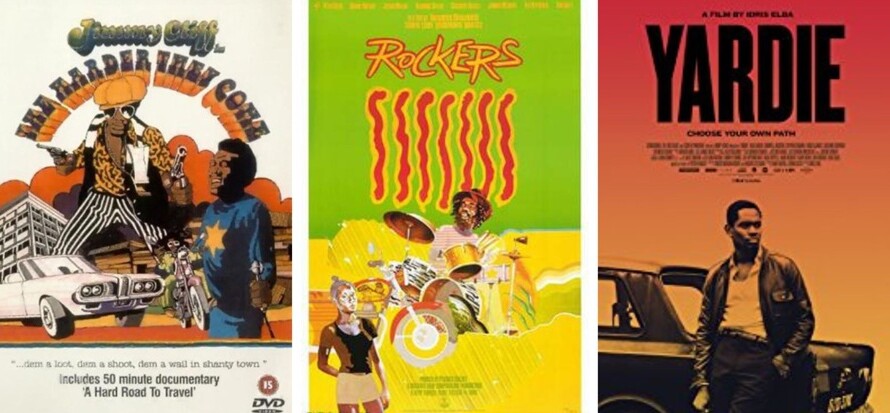
Holiday Traditions Around the Caribbean
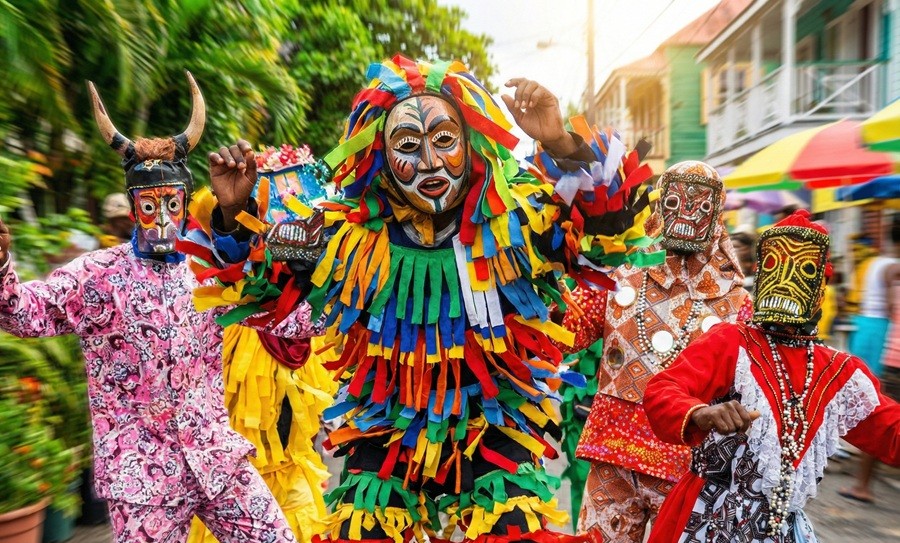
Across the Caribbean, the holiday season comes alive through music, masquerade, and community celebration. From Jamaica’s Jonkonnu to Bahamian Junkanoo and Navidad in the Latin Caribbean, these traditions preserve centuries of African and Caribbean cultural memory.
The Bahamas: Junkanoo
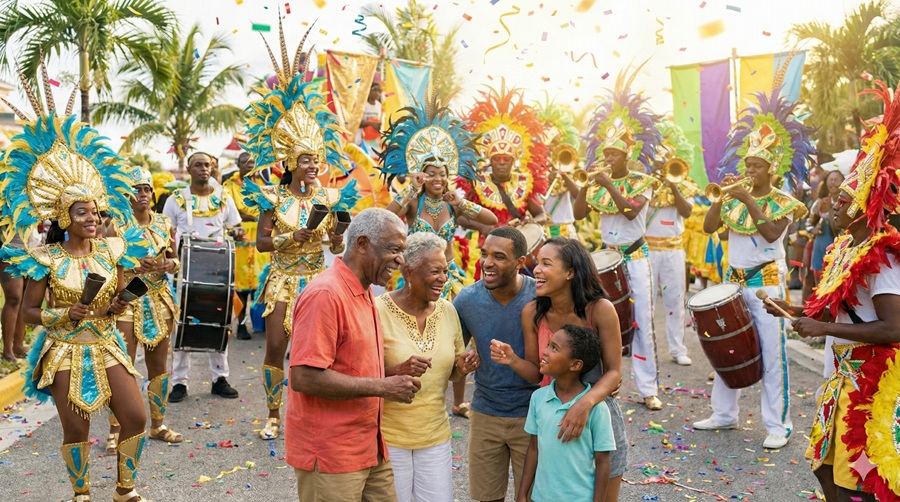
In the Bahamas, Junkanoo is the national cultural festival, celebrated with massive street parades on Boxing Day and New Year’s Day. Dating back to the early 19th century, the tradition also draws from the legend of John Canoe, adapted by enslaved Africans as a form of cultural expression and resistance.
Junkanoo’s driving sound comes from goatskin drums, cowbells, whistles, and horns, creating an intense, fast-paced rhythm. Parade groups, known as factions, compete year-round in music, choreography, and costume design, with parades often starting in the early morning hours for maximum dramatic effect.
Today, Junkanoo remains a cornerstone of Bahamian identity—a moving fusion of music, wearable art, community pride, and history.
Learn more here
Navidad in the Latin Caribbean
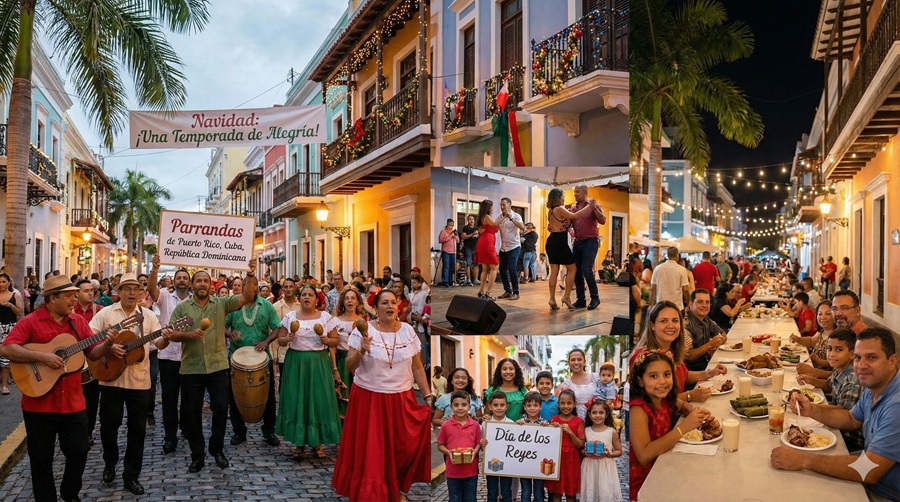
In the Latin Caribbean, Navidad is a full season of celebration, not just a single holiday. Across Puerto Rico, Cuba, and the Dominican Republic, neighborhoods come alive with Parrandas—late-night musical visits filled with drums, guitars, and aguinaldos.
Dance styles like bomba, plena, salsa, and bachata spill into the streets, while traditional holiday drinks—coquito, ponche, and crema de vie—are shared among family and friends. On Nochebuena, families gather around slow-roasted lechón, pasteles, and festive side dishes.
The celebrations continue beyond Christmas to Día de los Reyes, when gifts, sweet breads, and well-wishes close out the season. Joyful, musical, and deeply rooted in tradition, Navidad in the Latin Caribbean is a celebration of culture, community, and continuity.
Learn more here
Jamaica: Jonkonnu
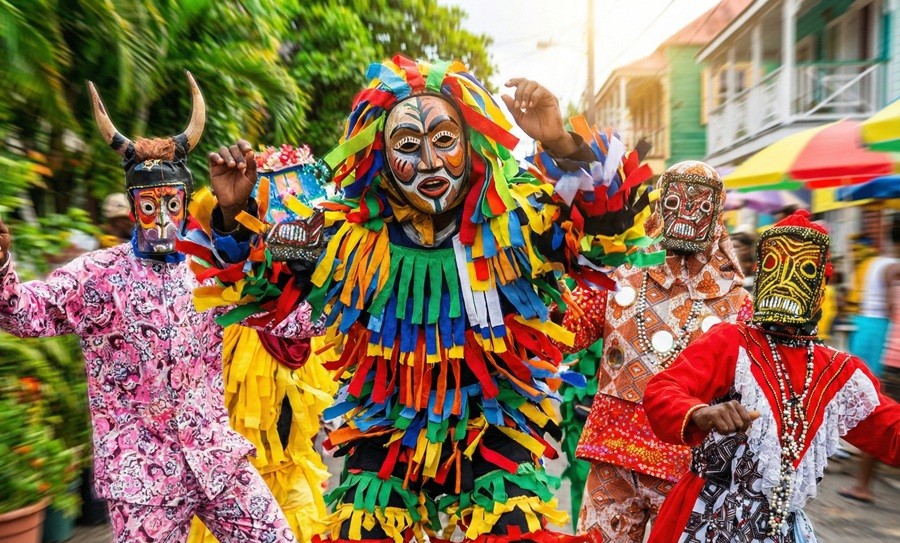
Jonkonnu is one of Jamaica’s oldest African-derived traditions, historically performed during the Christmas season, especially around Boxing Day. The name is believed to come from John Canoe, a West African folk hero whose story crossed the Atlantic during slavery.
Jonkonnu bands feature masked masqueraders portraying characters like the King and Queen, Cow Head, Horse Head, Belly Woman, and the iconic Pitchy Patchy, who wears ragged cloth and cracks a cattle whip to keep rhythm and energy high. Rooted in Akan, Yoruba, and Ga traditions, Jonkonnu offered enslaved Africans rare moments of celebration, disguise, and creative freedom.
Accompanied by drums, rattles, fifes, bottles, and other found instruments, troupes once paraded through towns and villages, engaging communities and collecting small gifts. While less common today, Jonkonnu remains a powerful symbol of Jamaica’s African heritage, known for its bold costumes, humor, and visual spectacle.